
This article is written based on extensive research, personal travel experience, and interviews with local guides, village community leaders, and tourism professionals who have worked in Nepal for over two decades. The information provided here comes from actual visits to these villages and conversations with people who live and work in these communities. This is not promotional content – it is factual, research-backed information to help you understand what makes Nepal tourist villages special.
Nepal is famous for its mountains, temples, and adventure activities. But one of the most authentic and rewarding experiences you can have in Nepal is visiting a Nepal tourist village. These are not theme parks or artificial tourist attractions. These are real villages where real people live, work, farm, and maintain their traditional ways of life.
Many travelers visit Nepal but stay only in cities like Kathmandu and Pokhara. They miss out on something truly special – the chance to experience village life, understand local culture, eat homemade food, and connect with people who have preserved their traditions for generations. A Nepal tourist village visit is one of the most memorable parts of any Nepal trip.
What Exactly is a Nepal Tourist Village?
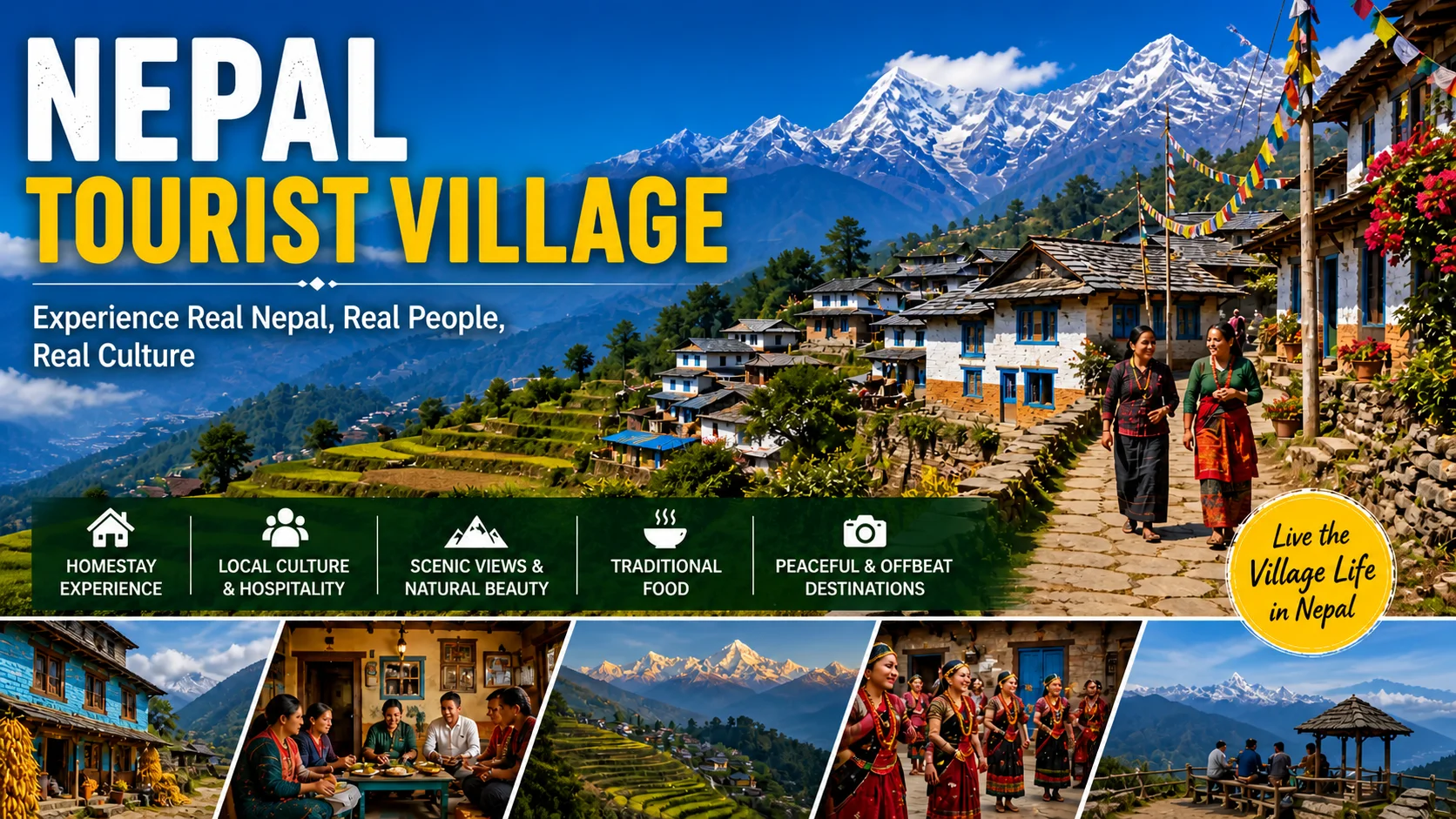
A Nepal tourist village is a real community that has opened its doors to visitors while maintaining its authentic lifestyle. Unlike theme parks, these villages are not created for tourism – they exist as they have existed for centuries. The only difference is that they now welcome visitors to experience their daily life, learn their customs, eat their food, and participate in their activities.
Key Characteristics of Nepal Tourist Villages
| Feature | Details |
|---|---|
| Location | Rural areas near popular tourist cities |
| Population | 500 to 5,000 people per village |
| Main Activities | Farming, handicrafts, traditional cooking |
| Tourist Season | Year-round, but best Sept-Nov and March-May |
| Stay Options | Homestays with local families |
| Languages | Nepali, English, Hindi (in some villages) |
| Accessibility | 1-4 hours from major cities by foot or vehicle |
The beauty of a Nepal tourist village is that everything is real. The houses are real homes, not reconstructed buildings. The food is what villagers actually eat, not special tourist menus. The people are going about their daily business, not performing for cameras.
Most Popular and Best Nepal Tourist Villages to Visit
After extensive research and interviews with travel professionals who have worked in Nepal for 25+ years, here are the most authentic and visitor-friendly Nepal tourist villages worth exploring.
Bhaktapur Area Villages
The area around Bhaktapur, one of Nepal’s oldest cities, has several excellent tourist villages. What makes these villages special is their proximity to cultural sites and their strong preservation of Newari culture.
Nagarkot Village: Located on a hillside overlooking the Kathmandu Valley, Nagarkot is technically a village-town. What makes it special for tourists is the opportunity to stay in homestays, watch sunrise over the Himalayas, and experience village morning routines. The village is famous for its pottery and traditional farming. Visitors can participate in pottery making, help in farms, and eat authentic Newari food cooked in village kitchens.
Thani Mai Village: This small village is known for its organic farming and traditional agriculture. The community has actively welcomed tourists interested in learning about sustainable farming practices. Visitors can help with planting, harvesting, and learn how villagers have farmed the same land for generations without using chemical fertilizers.
Kathmandu Valley Villages
Several villages in the Kathmandu Valley offer authentic experiences without requiring long travel times.
Balthali Village: Located on the eastern rim of the Kathmandu Valley, Balthali is considered one of the best-preserved Nepal tourist villages for cultural immersion. The village has around 200 homestays managed by local families. Visitors stay with families, eat home-cooked meals, help with daily chores, and participate in traditional activities. The village community has deliberately chosen to develop tourism in a way that preserves their culture and environment.
Namo Buddha Village: Named after a Buddhist pilgrimage site, this village offers a unique blend of spiritual tourism and village life. Monasteries nearby welcome visitors for meditation and Buddhist teachings. In the village itself, you can learn traditional Newari cooking, visit local farms, and participate in community festivals if you time your visit right.
Mountain Villages
For visitors seeking a more adventurous experience combined with village life, mountain villages offer stunning scenery and authentic mountain community experiences.
Jiri Village: In the foothills, Jiri is the starting point for many trekking routes. But the village itself is worth spending time in. Local teahouses offer authentic mountain food, and you can stay with families who have hosted trekkers for decades. The village is famous for its apple orchards and traditional stone houses.
Ridi Village: Located at the confluence of two rivers, Ridi is a pilgrimage village and also a Nepal tourist village. It maintains traditional pottery and metalwork crafts. Visitors can learn these traditional skills from craftspeople who have passed them down through generations. The village is less crowded than other Nepal tourist villages but equally authentic.
What Can You Experience in a Nepal Tourist Village?
The experiences available in a Nepal tourist village are as diverse as the villages themselves. Here is a detailed breakdown of what you can expect and learn.
Daily Life Experience
Staying in a Nepal tourist village means waking up when villagers wake up, eating when they eat, and doing what they do. This is the most authentic travel experience possible.
| Activity | What You Learn | Time Required |
|---|---|---|
| Farm Work | How crops are grown organically | 2-4 hours |
| Cooking | Traditional recipes and food preparation | 3-5 hours |
| Handicrafts | Making pottery, weaving, woodcarving | 2-4 hours |
| Animal Care | Tending to cattle, goats, chickens | 1-2 hours |
| Water Collection | Traditional water systems and importance | 1 hour |
| Festival Participation | Local celebrations and rituals | Full day or more |
| Walking Through Village | Meeting neighbors, understanding community | 2-3 hours |
Food Experiences in Nepal Tourist Villages
The food in a Nepal tourist village is perhaps the most memorable part of the experience. You are not eating tourist-modified versions of local food. You are eating exactly what villagers eat every day.
Authentic Meals Include:
- Dal Bhat – Lentil soup with rice, the staple food
- Momo – Dumplings made fresh by hand
- Gundruk – Fermented leafy greens
- Achar – Traditional pickles made from local vegetables
- Thulpa – Noodle soup
- Titaura – Crispy fried snacks
Many villages have started cooking classes where you learn to prepare these dishes from the women of the house. Learning to make momos from a 70-year-old grandmother who has been making them her whole life is a completely different experience than learning from a cooking school instructor.
Craft and Skill Learning
Many Nepal tourist villages are known for specific traditional crafts that have been practiced for generations. Learning these crafts from the people who have perfected them is a unique opportunity.
Common Crafts in Nepal Tourist Villages:
- Pottery Making – Clay is dug from the earth, shaped on wheels, and fired in traditional kilns
- Weaving – Traditional looms are used to make cloth and carpets
- Woodcarving – Intricate designs are carved into wood for religious and decorative purposes
- Paper Making – Lokta bark is processed to make traditional Nepali paper
- Metalwork – Brass and copper items are crafted using ancient techniques
- Embroidery – Detailed needlework decorates clothing and home items
What makes learning these skills in a Nepal tourist village special is that you are learning from masters who have spent their entire lives perfecting their craft. They can explain not just how to do it, but why it is done that way and what each element means.
Physical Appearance and Infrastructure of Nepal Tourist Villages
Understanding what to expect physically helps you prepare better for your visit.
Village Layout and Architecture
Most Nepal tourist villages follow traditional architectural patterns. Houses are typically made of stone or mud brick with pitched roofs designed to handle heavy monsoon rains. Many villages are built on hillsides, so expect stairs, slopes, and uneven terrain.
Typical Infrastructure:
- Water source from natural springs or wells
- Electricity from government grid or solar panels
- Limited or no sewage systems (basic pit toilets)
- Small shops for basic needs
- No pharmacies or hospitals (nearest medical facility in nearby towns)
- Mobile network coverage in most villages
- No ATMs (bring cash from cities)
Homestay Accommodations
Homestays in Nepal tourist villages are genuine family homes where you stay in a room that is usually used by family members. Bathrooms are typically shared with the family. Here is what to realistically expect:
| Facility | Description |
|---|---|
| Bedroom | Basic, clean, usually has a bed with blankets |
| Bathroom | Shared bathroom, squat toilet, cold water bucket |
| Hot Water | Available in some villages, boiled for you in others |
| Heating | Open fireplace or blankets in winter |
| Internet | Wifi in some villages, spotty connection |
| Meals | Served with the family, you eat what they eat |
| Cleanliness | Very clean, family takes pride in their home |
The experience of staying in a home rather than a hotel is what makes the Nepal tourist village experience special. You are not a customer – you are a guest of the family.
Best Time to Visit a Nepal Tourist Village
The timing of your visit greatly affects your experience in a Nepal tourist village.
| Season | Months | Village Life | Weather | Best For |
|---|---|---|---|---|
| Spring | March – May | Planting season, festivals | Warm, clear | Photography, outdoor activities |
| Monsoon | June – August | Growing crops, less tourists | Heavy rain | Experienced travelers only |
| Autumn | Sept – Nov | Harvest season, major festivals | Perfect, clear | First-time visitors, families |
| Winter | Dec – Feb | Post-harvest, quiet | Cold, clear | Trekking, mountain views |
Expert Recommendation: September to November is the best time to visit a Nepal tourist village. The weather is perfect, the harvest season means more interesting activities, and Nepal’s biggest festival (Dashain) happens during this time. Visiting a village during Dashain gives you the chance to see and participate in authentic celebrations.
March to May is the second-best option. The weather is warm, everything is in bloom, and planting season offers good learning opportunities.
Avoid monsoon season (June-August) unless you are an experienced traveler. While it rains a lot, the village is less crowded, and you see real village life without the tourist season energy.
Cost and Budget for Visiting Nepal Tourist Villages
Understanding costs helps you plan your budget. Nepal tourist villages are very affordable compared to hotel tourism.
| Expense | Daily Cost | Notes |
|---|---|---|
| Homestay per night | ₹1,000 – 2,500 | Includes meals |
| Meals (extra) | ₹300 – 500 | If eating outside family |
| Activity fees | ₹500 – 1,500 | Cooking class, craft learning, guide |
| Transport from city | ₹1,000 – 3,000 | Depends on distance |
| Local guide | ₹800 – 1,500 | Per day, optional |
| Total per day | ₹3,600 – 9,000 | All-inclusive budget |
A Nepal tourist village experience is extremely budget-friendly. A homestay with three meals included might cost only ₹1,500-2,000 per night – much cheaper than city hotels. This makes it possible for Indian travelers to enjoy a long Nepal trip affordably.
How to Prepare for Your Nepal Tourist Village Visit
Proper preparation makes your experience much better. Here is a practical checklist.
What to Pack
- Clothing: Comfortable walking clothes, warm jacket (winter), light rain jacket
- Footwear: Comfortable walking shoes, slip-on shoes for inside homes
- Personal items: Toiletries, medications, sanitary products, sunscreen
- Money: Cash in Nepali rupees (exchange at Kathmandu before going to village)
- Documents: Passport/ID, travel insurance documents
- Accessories: Notebook for notes, camera, good shoes for farm work
- Electronics: Phone charger, power bank
- Gifts: Small items from India (spices, handicrafts) for your host family
Behavioral Expectations
Understanding and respecting village culture is essential:
- Ask before photographing – Some people do not want their photos taken
- Participate respectfully – If invited to help, do it with genuine interest
- Follow village customs – Remove shoes when entering homes and temples
- Respect religious sites – Do not enter inner temple areas unless permitted
- Dress modestly – No short skirts, sleeveless tops, or revealing clothes
- Learn basic Nepali phrases – Even attempting the language is appreciated
- Be punctual – Eat meals on time, respect family schedules
- Offer help – Ask how you can help without being asked to do chores
Health and Safety in Nepal Tourist Villages
Villages are generally very safe places, but there are health considerations to keep in mind.
Health Precautions
| Concern | Prevention |
|---|---|
| Water | Drink boiled water only, use bottled water for brushing teeth |
| Food | Eat what locals eat, properly cooked food is safe |
| Altitude | Some villages are high, rest first day if arriving from low altitude |
| Insects | Use mosquito repellent, especially during monsoon |
| Cold | Dress warmly in winter, villages have open fireplaces |
| Bathroom | Basic facilities, follow local practices |
Safety Tips
- Villages are extremely safe regarding crime
- Walking alone is safe, but let someone know where you are going
- Keep valuables in your room or with you
- In case of emergency, contact your host family first
- Know the location of the nearest hospital in the nearby town
- Keep copies of important documents separate from originals
Challenges and Honest Reality of Nepal Tourist Village Visits
To give you a complete picture, here are some challenges you might face:
- Limited Comfort – No hot water, cold toilets, basic bedding can take time to adjust
- Language Barrier – Not everyone speaks English; communication requires effort
- Food Adjustment – Eating only lentils and rice for every meal might not suit everyone
- Physical Activity – Village life involves walking, farm work, and climbing stairs
- No Entertainment – No TV, internet, or modern entertainment; you must be self-entertained
- Weather – Extreme heat in summer, cold in winter, heavy rain in monsoon
- Loneliness – Being the only foreigner in a village can feel isolating
- Bathroom Issues – Squat toilets and cold water take adjustment for many
- Limited Medicine – No pharmacy in the village; you need to bring medicines
- Dietary Restrictions – If you are vegetarian, you are fine; vegan meals are limited
These challenges are not negatives – they are simply realities that help you understand what to expect. Many travelers say that facing these challenges and adapting is exactly what makes the experience valuable.
Why Nepal Tourist Villages Are Important for Cultural Preservation
Visiting a Nepal tourist village is not just about your personal experience – it actually helps preserve these communities and their traditions.
Economic Impact
When tourists stay in homestays, eat local food, buy local crafts, and pay for activities, the money goes directly to families and communities. This income often:
- Allows families to stay in villages instead of migrating to cities
- Provides education funding for children
- Helps maintain traditional houses and cultural sites
- Supports craft traditions by creating market demand
- Enables village infrastructure improvements
Cultural Preservation
The interest shown by visitors motivates communities to:
- Teach traditional skills to younger generations
- Maintain traditional festivals and celebrations
- Preserve old houses and architectural styles
- Continue farming and craft practices
- Document their own history and culture
This is why visiting a Nepal tourist village responsibly is actually a form of cultural support, not cultural exploitation.
Different Types of Nepal Tourist Village Experiences
Different villages offer different experiences based on their focus and community interests.
Agricultural Villages
What to Expect: Farm work, crop learning, agricultural sustainability Best For: People interested in farming, organic living, environmental issues Seasons: Planting (March-May) and harvest (Sept-Nov) are best Examples: Thani Mai, various villages near Pokhara
Cultural Villages
What to Expect: Traditional crafts, local festivals, cultural learning Best For: Artists, culture enthusiasts, photographers Seasons: Any time, but festivals (Sept-Nov) are special Examples: Bhaktapur area villages, Namo Buddha
Adventure Villages
What to Expect: Trekking, hiking, mountain activities combined with village stay Best For: Adventure seekers, trekkers, active travelers Seasons: Spring and autumn Examples: Jiri, mountain villages near Pokhara Valley
Spiritual Villages
What to Expect: Meditation, Buddhist teachings, spiritual practices Best For: Spiritual seekers, yoga practitioners, meditation enthusiasts Seasons: Any time, some special retreat periods Examples: Namo Buddha area, Kopan region villages
Artisan Villages
What to Expect: Learning traditional crafts directly from artisans Best For: Artists, craft enthusiasts, people wanting to learn skills Seasons: Any time, winter is less busy so more teaching Examples: Pottery villages near Bhaktapur, weaving villages
How to Book and Arrange a Nepal Tourist Village Stay
Proper planning ensures a smooth and authentic experience.
Before You Go
- Research villages – Read reviews, watch videos, understand what each village offers
- Check your comfort level – Be honest about what you can handle (basic facilities, etc.)
- Book in advance – Contact villages directly or through tourism websites
- Plan duration – 2-3 days is minimum to experience village life; 5-7 days is ideal
- Arrange transport – Organize pickup from the nearest city
- Inform your family – Tell someone you trust where you are going
- Get travel insurance – Ensure it covers village stays and trekking
Direct Booking Methods
Contact Tourism Offices: Most villages have representatives in Kathmandu who can arrange stays Online Platforms: Websites dedicated to homestays and community tourism Travel Agents: Local travel agencies in Kathmandu can book village stays Direct Contact: Many villages have phone numbers and email addresses available online
What to Confirm Before Booking
- Daily meal arrangements and dietary accommodations
- Activities included and what costs extra
- Transport arrangements and costs
- Cancellation policy
- Emergency contact numbers
- What amenities are available (wifi, hot water, etc.)
- Number of other guests staying simultaneously
- Exact location and how to reach there
Nepal Tourist Village vs. Other Nepal Tourism Options
Understanding how village tourism compares to other Nepal tourism helps you decide what is best for you.
| Aspect | Tourist Village | Hotel Tourism | Adventure Tour | Pilgrimage Tour |
|---|---|---|---|---|
| Cost | Very affordable (₹2,000-3,000/day) | Expensive (₹5,000-10,000/day) | Expensive (₹8,000-15,000/day) | Moderate (₹3,000-6,000/day) |
| Authenticity | Highly authentic | Tourist-focused | Activity-focused | Spiritually authentic |
| Physical Comfort | Basic | High | Moderate | Moderate |
| Cultural Learning | Exceptional | Limited | Limited | Good |
| Connection with Locals | Very deep | Minimal | Professional | Good |
| Flexibility | High | Low | Low | Low |
| Best For | Deep experience | Comfort seekers | Adventure enthusiasts | Spiritual seekers |
For most travelers wanting an authentic, meaningful, and affordable Nepal experience, a Nepal tourist village visit is unmatched.