
Nepal is a beautiful country known for mountains, temples, forests, and fast-flowing rivers. Many rivers in Nepal start from the Himalayan glaciers and move toward the plains. These rivers help in farming, electricity production, fishing, and tourism. Among all these rivers, many people want to know about the largest river of nepal.
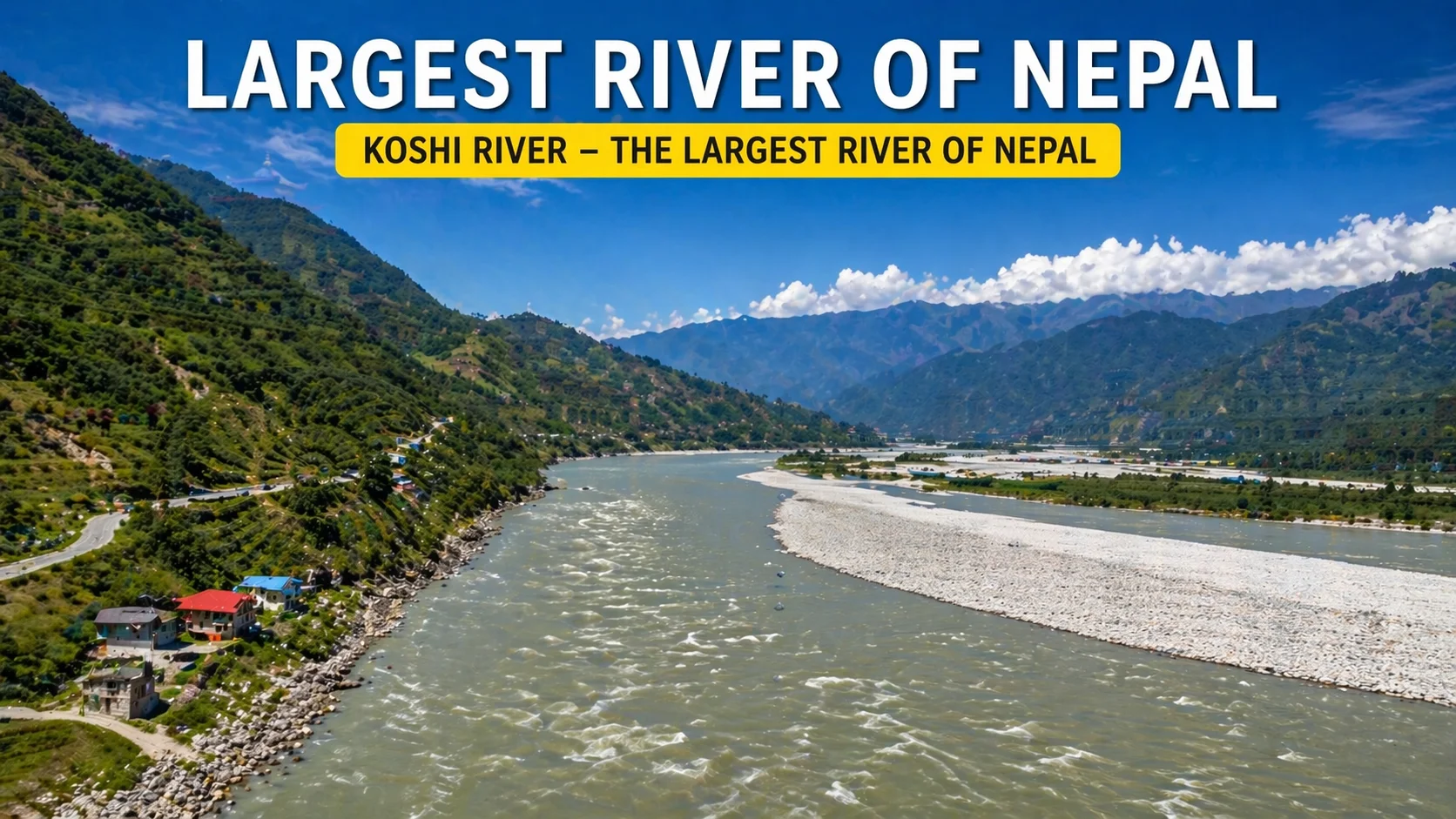
If you are searching for the largest river of nepal, the simple answer is the Koshi River system, also called Sapta Koshi. It is one of the most powerful and wide river systems in Nepal. This river is important for nature, people, and the economy of Nepal.
What is the Largest River of Nepal?
The largest river of nepal is generally known as the Koshi River system. It is made by seven major rivers, so it is also called Sapta Koshi. “Sapta” means seven. These seven rivers join together and form one large river.
The seven rivers of Sapta Koshi include:
| River Name | Origin Area |
|---|---|
| Arun River | Tibet region |
| Tamor River | Eastern Nepal |
| Sun Koshi | Central Himalayas |
| Dudh Koshi | Everest region |
| Bhote Koshi | Tibet border area |
| Tama Koshi | Rolwaling area |
| Indravati | Nepal hills |
These rivers meet together and create a giant river system.
Why Koshi River is Called the Largest River
Many people ask why Koshi gets this title. The answer is simple. The Koshi has a large drainage area, many tributaries, and very high water volume.
It carries a huge amount of water during monsoon season. In rainy months, the river becomes very wide and strong.
Source of the Koshi River
The water of the largest river of nepal comes from snow mountains, glaciers, rainfall, and smaller streams. Most rivers begin in the Himalayan region.
This means the river gets fresh cold water from some of the world’s highest mountains. Because of this, the flow remains strong for most of the year.
Length and River Journey
The Koshi river system travels from mountain areas of Nepal and Tibet toward the plains. After leaving Nepal, it enters India and later joins the Ganga river system.
Its journey passes through hills, valleys, forests, farms, and flat land. This long travel makes the largest river of nepal very important for both Nepal and India.
Importance for Nepal
The largest river of nepal helps the country in many ways. It is not only a river but also a lifeline for many people.
Farming Support
Water from the river is used for irrigation. Farmers grow rice, wheat, sugarcane, and vegetables with river water.
Hydropower
Nepal has strong hydropower potential. Fast-moving rivers like Koshi can generate electricity.
Fishing and Daily Use
Many local families depend on fishing and river water for daily activities.
Natural Beauty
The river valley gives amazing views. Many travelers visit eastern Nepal to enjoy nature.
Flood History of Koshi River
The Koshi River is famous for power, but it is also known for floods. During heavy monsoon rains, water levels can rise quickly. Because of this, the river has changed its path many times in history.
That is why the largest river of nepal is respected as both useful and powerful.
Governments have built embankments and control projects to reduce flood damage.
Arun River: Major Part of the System
The Arun River is one of the strongest tributaries of Koshi. It is also considered one of the oldest rivers in the world by many geologists. It existed before the Himalayas fully rose.
This makes the largest river of nepal even more special because one of its main rivers has ancient geological history.
Pushkar Ghat and River Tourism
Pushkar Ghat is a peaceful riverside place where visitors can enjoy local culture, river views, and spiritual feelings. Ghats are often used for bathing, prayer, and relaxing by the water.
When travelers explore eastern Nepal routes, places like Pushkar Ghat add cultural value to the journey near the largest river of nepal.
For travelers who love calm natural places, Pushkar Ghat can be a beautiful stop.
Best Time to Visit the River Area
The best months to visit areas near the largest river of nepal are:
| Season | Experience |
|---|---|
| October to December | Clear sky and cool weather |
| February to April | Pleasant climate and greenery |
| Monsoon (June-August) | Strong flow but heavy rain |
Winter and spring are best for sightseeing.
Wildlife Around the River
The river region supports birds, fish, and wetland life. Many migratory birds come during certain seasons. Green areas near the river are useful for biodiversity.
Because of this, the largest river of nepal is not only useful for people but also for nature.
Travel Tips for Visitors
If you plan to visit river regions of Nepal:
- Carry light warm clothes in winter
- Keep water and snacks during road travel
- Respect local culture near ghats and temples
- Avoid risky areas during monsoon season
- Use local guides when exploring remote places
With proper planning, your trip near the largest river of nepal can be memorable.
Interesting Facts About Koshi River
- It is called Sapta Koshi because seven rivers join together.
- It is widely known as the largest river of nepal.
- It starts from Himalayan snow regions.
- It later enters India and joins bigger river systems.
- It has changed course many times in history.
How Nepal Tours Package Can Help
Nepal tours package offers helpful travel planning for Nepal visitors. If you want to explore rivers, temples, mountain towns, or cultural places, a planned package saves time and gives comfort.
Travelers who want to see eastern Nepal routes, scenic river points, and local heritage can choose guided support.