
The Longest River of Nepal is an important topic for students, travelers, and people who love geography. Nepal is a beautiful country with mountains, rivers, and forests. Among all rivers, one river is known as the longest and most important.
In this article, you will learn about the Longest River of Nepal in very simple English. This guide is easy to read and full of useful information.
Which is the Longest River of Nepal?
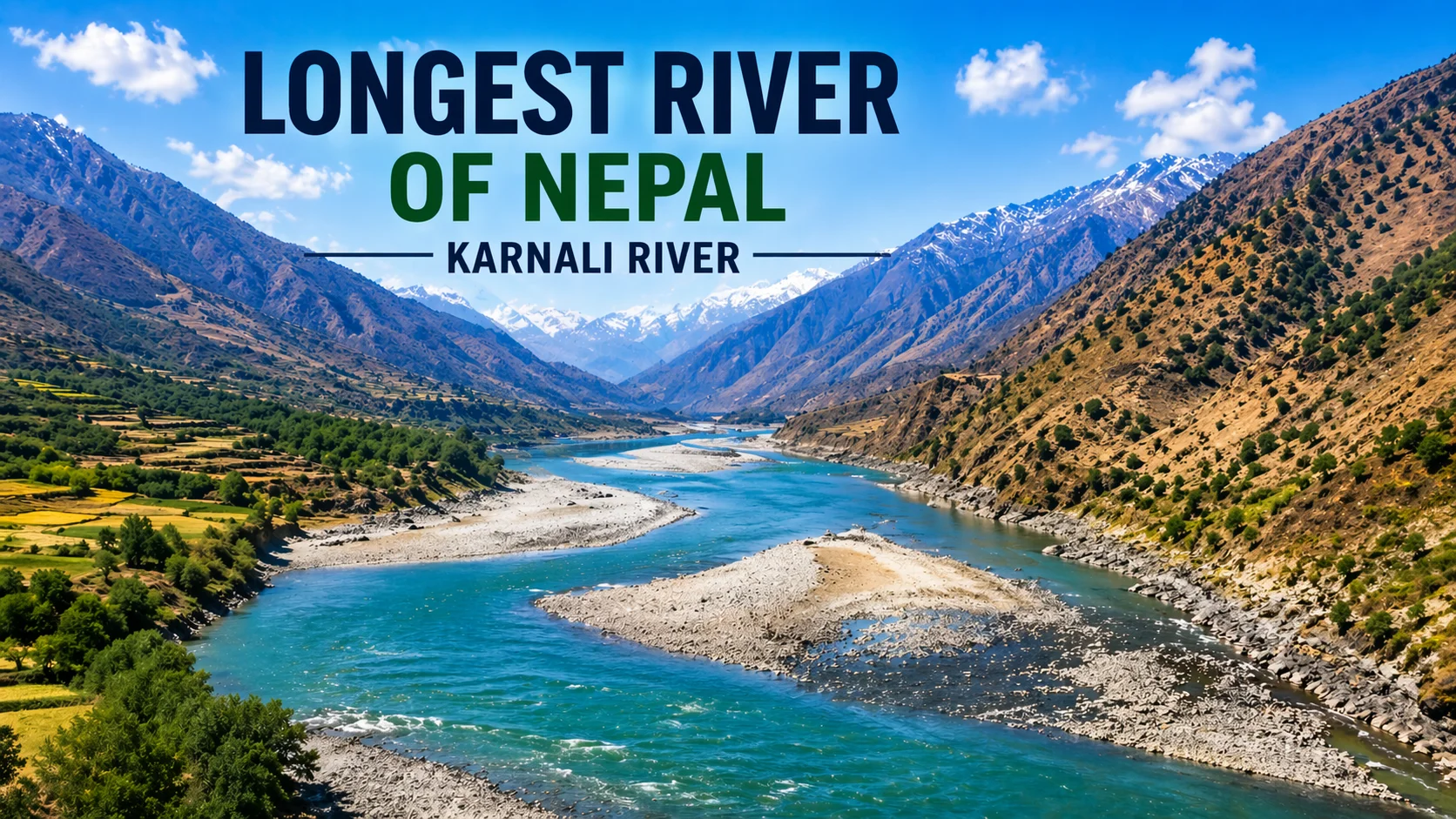
The Longest River of Nepal is the Karnali River. It is the biggest and longest river in Nepal.
This river flows through many regions and supports the lives of thousands of people. It is also known for its natural beauty and strong water flow.
Basic Information About Karnali River
| Feature | Details |
|---|---|
| River Name | Karnali River |
| Length | Around 507 km (in Nepal) |
| Source | Tibetan Plateau |
| Flows Through | Western Nepal |
| Ends In | Ganga River system |
This table helps you understand the key details of the Longest River of Nepal.
Where Does Karnali River Start?
The Karnali River starts from the Tibetan Plateau. This place is very high and cold. Snow melts and forms water streams. These streams join together and become a big river.
After that, the river enters Nepal and flows through hills and plains.
Route of the Longest River of Nepal
The Longest River of Nepal flows through many areas. It travels a long distance before joining bigger rivers.
River Path Overview
| Step | Location | Description |
|---|---|---|
| 1 | Tibet | River begins |
| 2 | Humla (Nepal) | Entry into Nepal |
| 3 | Karnali Region | Main flow area |
| 4 | Terai Plains | Flat land flow |
| 5 | India | Joins Ganga River |
This journey shows how important this river is.
Why is Karnali River Important?
The Longest River of Nepal is very useful for people and nature.
First, it provides water for farming. Farmers use this water to grow crops. Second, it helps in electricity production. Hydropower projects are built on this river.
Also, many people depend on it for daily needs like drinking and washing.
Natural Beauty of Karnali River
The Karnali River is not only long but also very beautiful.
- It flows through green forests
- It passes between high mountains
- It has clean and fresh water
Because of this, many tourists visit this river area.
Activities Around Karnali River
People can enjoy many activities near the Longest River of Nepal.
| Activity | Description |
|---|---|
| Rafting | Adventure water sport |
| Fishing | Local fishing activity |
| Trekking | Walking in nearby hills |
| Sightseeing | Enjoy nature views |
These activities make the river popular among travelers.
Wildlife Near Karnali River
The area around the Karnali River is rich in wildlife. Many animals and birds live here.
You can find:
- Deer
- Tigers
- Birds
- Fish
The river supports this ecosystem.
Best Time to Visit Karnali River
Choosing the right time is important.
| Season | Condition |
|---|---|
| Summer | Warm but manageable |
| Monsoon | Heavy rain, risky |
| Winter | Best time to visit |
Difference Between Karnali and Other Rivers
Nepal has many rivers, but Karnali is special.
| River | Length | Region |
|---|---|---|
| Karnali | Longest | Western Nepal |
| Gandaki | Medium | Central Nepal |
| Koshi | Large | Eastern Nepal |
This comparison shows why Karnali is known as the Longest River of Nepal.
Importance for Nepal’s Economy
The Karnali River helps Nepal’s economy in many ways.
It supports agriculture. It helps in hydropower projects.It also attracts tourists.
Because of this, it plays a big role in the country’s development.
Simple Travel Plan
| Day | Activity |
|---|---|
| Day 1 | Reach Nepal |
| Day 2 | Travel to Karnali region |
| Day 3 | Explore river area |
| Day 4 | Enjoy activities |
| Day 5 | Return |
If you want to visit the Longest River of Nepal, here is a simple plan:
Major Districts Through Which Karnali River Flows
| District Name | Importance of Karnali River |
|---|---|
| Humla | River enters Nepal region nearby |
| Mugu | Supports remote mountain communities |
| Jumla | Helps farming and local water needs |
| Kalikot | Important for villages and agriculture |
| Surkhet | Supports growing towns and trade |
| Bardiya | Helps plains farming and nature areas |
The longest river of nepal passes through several important districts of western Nepal. These areas depend on the river for farming, water supply, fishing, and local transport. The river also adds natural beauty to these districts and supports tourism. Many villages near the river have a close connection with it in daily life.